Updated 9 November 2026 · Written by the Two Storey Extensions team
Short answer: A two-storey extension usually adds value, because it adds floor area and often a bedroom or bathroom: Nationwide's research found 10% more floor area was associated with about 5% higher value, and adding a double bedroom and bathroom to a three-bedroom, one-bathroom house was associated with up to 24% higher value. The value added is not certain, and it may not cover the full cost. The ceiling price for your street, the design and how much garden you lose all matter.
How much value can a two-storey extension add?
Nationwide's research on what adds value to a home, published in October 2025, used its lending data to estimate how different features affect house prices, other things being equal. Its findings relevant to a two-storey extension were:
| Improvement | Associated increase in value |
|---|---|
| 10% more floor area | About 5% |
| Adding a double bedroom to a two-bedroom house | About 13% |
| Adding a double bedroom and a bathroom (28 m²) to a three-bedroom, one-bathroom house | Up to 24% |
These are average effects across many homes, not a forecast for yours. They describe differences in value between otherwise similar homes, not the return on a particular building project.
What is a ceiling price, and why does it matter?
A ceiling price is the most that buyers are likely to pay for a house on your street or in your area, whatever has been done to it. If similar extended houses nearby sell for a certain amount, it is unlikely that yours will sell for much more, however good the extension is.
If your home is already close to the ceiling price, a large extension may add less value than the figures suggest. If it is one of the smaller houses on a street of larger ones, an extension that brings it into line with its neighbours may add more.
To get a sense of the ceiling, look at recent sale prices for extended and larger houses nearby, using sold-price records, and ask a local estate agent for a view before you commit to a design. Agents see what buyers in your area are willing to pay for.
Will a two-storey extension add more than it costs?
Not necessarily. Our guide price for a typical 28 m² two-storey rear extension is £56,000–£75,500, including VAT, at Standard specification in the West Midlands. Professional fees, planning or certificate fees, a contingency of around 10%, and any kitchen, bathroom or flooring costs come on top.
Whether the value added exceeds this depends on house prices where you live. In areas where homes sell for more per m² than they cost to build, an extension is more likely to pay for itself. Where prices are lower, the value added may be less than the cost.
Many homeowners extend for the space rather than as an investment. Moving home has its own costs, including stamp duty in England and Northern Ireland, Land Transaction Tax in Wales and Land and Buildings Transaction Tax in Scotland, plus legal and agents' fees. Compare the cost of extending with the cost of moving to a home with the space you need.
Which kind of space adds the most value?
Nationwide's figures suggest bedrooms and bathrooms matter. Adding a double bedroom was associated with a bigger increase in value than the extra floor area alone would suggest, and adding a bedroom and bathroom together was associated with the largest increase in its analysis.
A two-storey extension can do both: more living space downstairs and a bedroom, often with an en-suite, upstairs. The layout matters as much as the area. A new bedroom reached through another bedroom, or a ground floor that loses light because of the extension, can add less than expected.
Garden size is part of the picture. Buyers in many areas value outside space, and a deep extension on a short garden can take away more than it adds. A design that keeps a usable garden, good light in the existing rooms and a sensible flow through the house is more likely to be valued.
How do design and paperwork affect the value?
Buyers and their surveyors look at how well an extension is built and how well it fits the house. Matching materials, a roof that sits well with the main roof, good ceiling heights and well-placed windows all help it look like part of the house rather than an add-on.
Paperwork matters just as much. A buyer's solicitor will ask for the planning permission or lawful development certificate, the building regulations completion certificate, or in Scotland the accepted completion certificate, and any party wall surveyors' decisions in England and Wales. Missing documents can delay a sale or reduce the price.
Keep copies of drawings, structural calculations, electrical certificates and any warranties for products such as windows, boilers or roof coverings in one place. They show buyers that the work was done properly.
Questions about this topic
Does adding a bedroom add more value than adding living space?
Nationwide's research suggests bedrooms make a noticeable difference. Adding a double bedroom to a two-bedroom house was associated with about 13% higher value, more than the floor area alone would suggest. Living space still counts through floor area: 10% more floor area was associated with about 5%. A two-storey extension can add both.
Will a two-storey extension pay for itself when I sell?
It may not. The value added depends on local house prices, the ceiling price for your street and the quality of the extension. In some areas the increase in value exceeds the build cost; in others it does not. Ask a local estate agent for a view on value before you commit to a design.
Does losing garden reduce the value of my home?
It can. Buyers in many areas value outside space, so a large extension that leaves a very small garden may add less value than its floor area suggests. Planning and permitted development rules in each nation also limit how much of the garden can be built on. A design that keeps a usable garden is usually a safer choice.
What documents will a buyer ask for after I extend?
Usually the planning permission or lawful development certificate, the building regulations completion certificate, or in Scotland the accepted completion certificate, electrical certificates, and any party wall surveyors' decisions in England and Wales. Keep these with your drawings and structural calculations, because missing documents can delay a sale.
Sources
- Nationwide: What adds value, special report 2025
- Nationwide: What adds value to buy-to-let properties
- GOV.UK: Permitted development rights for householders, technical guidance
Related services
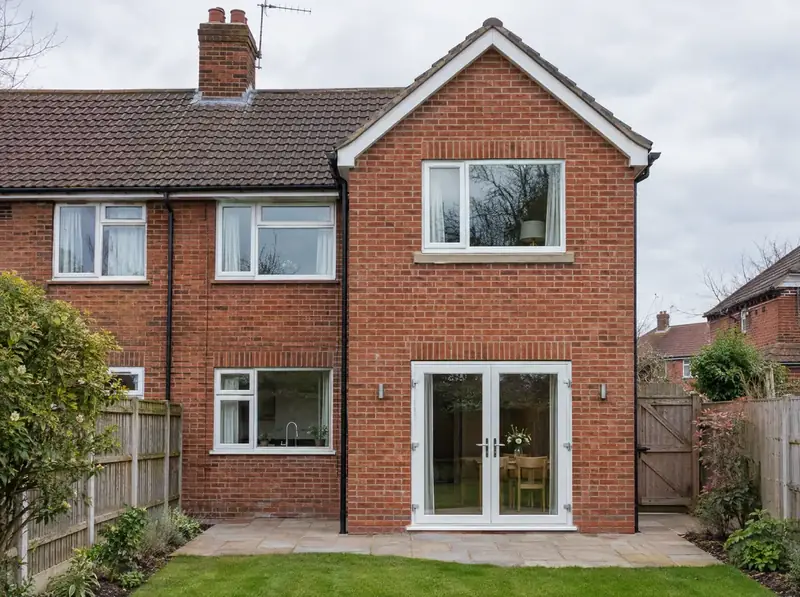
Two-storey rear extensions
A two-storey rear extension is a new two-floor addition built onto the back of your house, usually giving a larger kitchen or living space on the ground floor and one or two bedrooms or a bathroom above.
Guide from £56,000Learn more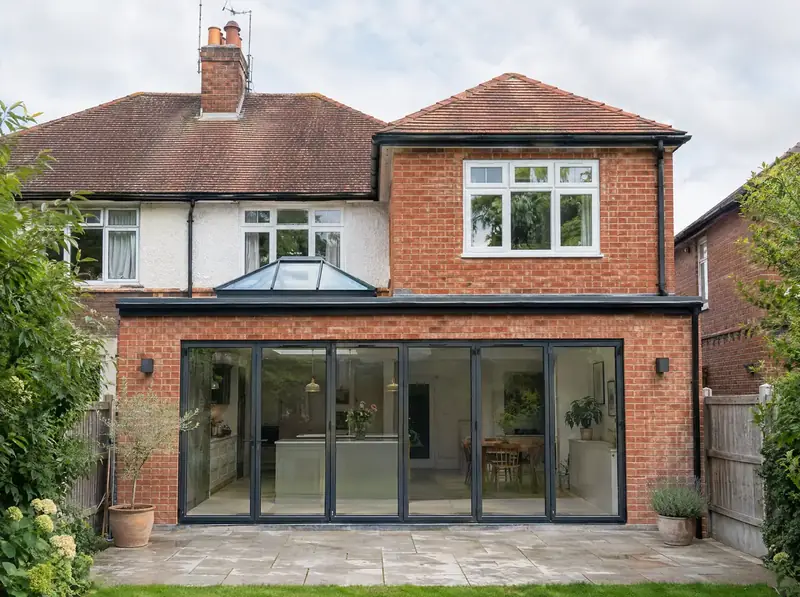
Part single, part two-storey extensions
A part single, part two-storey extension is an extension where the ground floor is wider or deeper than the floor above, so only part of it rises to two storeys.
Guide from £72,000Learn more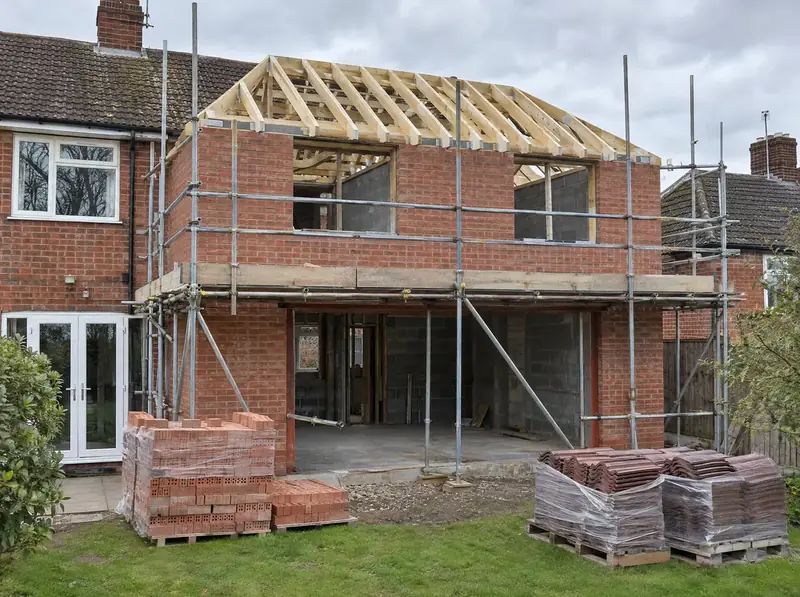
Design and build two-storey extensions
A design and build project for a two-storey extension involves one team taking responsibility for the whole job: the survey, design, planning or permitted development, structural engineering, building regulations, party wall matters where they apply and the construction itself.
Learn more