Updated 9 November 2026 · Written by the Two Storey Extensions team
Short answer: Yes, most people live at home during a two-storey extension, because most of the work happens outside until the builder breaks through into the house near the end. The hardest weeks are usually the breakthrough and any time without a working kitchen, so plan a temporary kitchen, protect the rest of the house from dust and agree with the builder how the site will be kept safe. Some households move out for a short spell at the messiest stage.
Is it realistic to stay at home during the build?
For most households, yes. A two-storey extension build typically takes 14 to 20 weeks, and for much of that time the work is outside: foundations, walls, the first floor and the roof. The existing house stays closed off until the extension is watertight.
The difficult periods are shorter. Groundworks are noisy and muddy. The breakthrough, when the builder opens up the walls between the old house and the new rooms, creates dust and can affect the kitchen, a bedroom or the landing. Services such as water, power and heating may be off for short periods.
Think about who lives in the house. Babies, people who work at home, people with breathing problems and pets may find some stages harder. Some households stay with family or rent somewhere for a week or two around the breakthrough, then move back for the finishing stages.
How can the work be phased to keep the house usable?
Ask your builder to plan the order of work so the house stays usable for as long as possible. A typical approach is:
- Build the extension's foundations, walls, first floor and roof without opening up the house.
- Fit windows and external doors so the extension is weathertight and lockable.
- Carry out first fix of electrics and plumbing and plaster the new rooms.
- Break through into the existing house at ground and first-floor level.
- Make good, finish and decorate, then move furniture into the new rooms.
Breaking through late means the existing rooms are disturbed for weeks rather than months. Agree the plan before work starts, and ask for notice of any days when services will be turned off.
How do I manage without a kitchen?
If the extension includes a new kitchen, or the breakthrough is through the existing kitchen wall, you may be without a kitchen for some weeks. Setting up a temporary kitchen in another room makes this much easier.
A basic set-up might include a fridge, a microwave or combination oven, a kettle, a toaster and a hob that plugs into a normal socket, on a table or spare worktop. A utility sink, or the bathroom basin, can be used for washing up, but it helps to have somewhere to rinse plates without carrying them up the stairs.
Keep the temporary kitchen away from the dustiest areas, and check with your builder that the sockets you plan to use will stay live during the work. Plan simple meals, use disposable plates for the hardest weeks and budget for some meals out.
How can I keep dust and noise under control?
- Dust screens: ask the builder to put up sealed temporary walls, often plastic sheeting on a frame with a zipped door, between the work area and the rest of the house before breaking through.
- Floor protection: protective sheeting or boards on routes the builders use, and a separate entrance for the site where possible.
- Clear the rooms: move furniture, pictures and valuables out of rooms near the breakthrough, and cover what you cannot move.
- Ventilation: keep internal doors to the work area closed and open windows on the far side of the house.
- Working hours: agree start and finish times with the builder, and check whether your council sets hours for noisy work.
Tell your neighbours when the noisiest stages, such as groundworks and breaking through, are planned.
How do I keep my family safe while the house is a building site?
The construction area is a building site, even though it is part of your home. Agree with your builder which areas are off limits, how the site will be fenced or secured and how access will be kept separate from your family's routes in and out of the house.
Children and pets need particular care. Keep them away from open trenches, scaffolding, mixers, tools and materials, and make sure gates and doors into the site are kept shut. Ask the builder to make the site safe at the end of each day, with trenches covered or fenced and ladders removed from scaffolding.
Keep smoke alarms working throughout, and check your escape routes still work if a door or stairway is blocked for a time. Tell your home insurer about the work before it starts, because some policies have conditions about building work or empty properties.
What should I know about scaffolding and access?
A two-storey extension needs scaffolding to full height for the walls and roof. The scaffold is usually up for several weeks. It can block light to the rooms behind it and makes it easier for intruders to reach upper windows, so keep windows locked and ask about scaffold alarms or removable ladders.
If the scaffold or a skip needs to go on the pavement or road, a licence or permit from the council is usually needed, and the builder or scaffolding firm normally arranges it. If the scaffold has to stand on a neighbour's land, you need their agreement first.
Plan where deliveries, materials and the skip will go before work starts. A clear route for the builders, separate from your front door if possible, makes daily life easier for everyone and reduces dirt brought through the house.
Questions about this topic
How long will I be without a kitchen during a two-storey extension?
It depends on the design. If the existing kitchen stays in use until the breakthrough, you may be without it for a few weeks near the end. If the new kitchen is part of the extension, the gap runs from removing the old kitchen to fitting the new one. Ask your builder for a timeline before work starts.
Should I move out during a two-storey extension?
Most people do not need to move out for the whole build. Some move out for a week or two around the breakthrough, when dust and disruption are at their worst, or when the kitchen or bathroom is out of use. It is worth considering if you have a new baby, work from home or have health conditions.
Will the builders need to use my toilet and electricity?
Builders usually need power and water, and many projects use the house supply. Agree this before work starts. Welfare facilities for the workers, including a toilet and a place to wash, should be arranged as part of the site set-up, so discuss whether a site toilet will be provided.
Do I need to tell my home insurer about the extension work?
Yes, it is sensible to tell your insurer before work starts. Some policies have conditions or exclusions for building work, and the cover may need to change while the house is partly open. Ask your builder for details of their own insurance too, so you know who is responsible if something goes wrong on site.
Sources
- GOV.UK: Design and building work, meeting building requirements
- GOV.UK: Fire safety, Approved Document B
- GOV.UK: The Party Wall etc. Act 1996, explanatory booklet
Related services
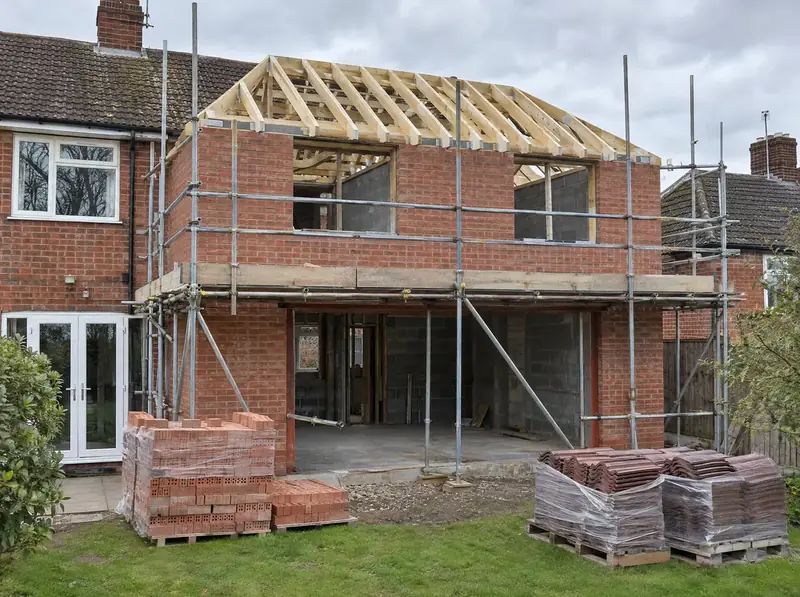
Design and build two-storey extensions
A design and build project for a two-storey extension involves one team taking responsibility for the whole job: the survey, design, planning or permitted development, structural engineering, building regulations, party wall matters where they apply and the construction itself.
Learn more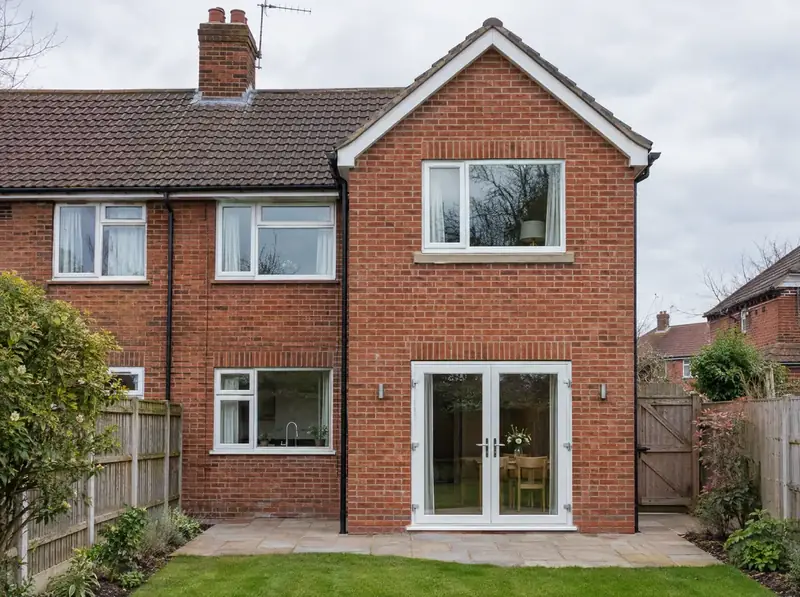
Two-storey rear extensions
A two-storey rear extension is a new two-floor addition built onto the back of your house, usually giving a larger kitchen or living space on the ground floor and one or two bedrooms or a bathroom above.
Guide from £56,000Learn more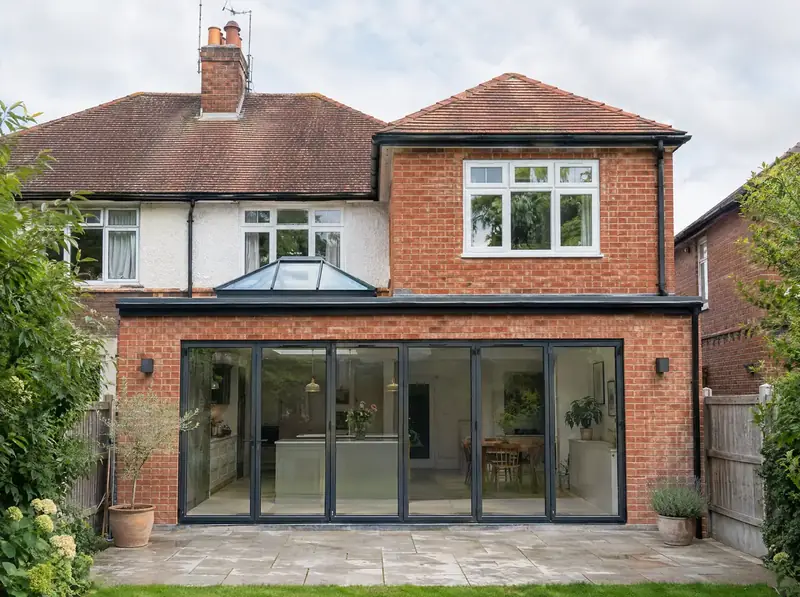
Part single, part two-storey extensions
A part single, part two-storey extension is an extension where the ground floor is wider or deeper than the floor above, so only part of it rises to two storeys.
Guide from £72,000Learn more