Updated 9 November 2026 · Written by the Two Storey Extensions team
Short answer: In Scotland, a two-storey extension can be permitted development under Class 1B only if no part of it is within 10 m of any boundary, it is no higher than the existing house, it does not front a road, and the house is not a flat or in a conservation area. Every two-storey extension needs a building warrant from the council's building standards service before work starts, and a completion certificate at the end. If you need planning permission, the householder fee is £371.
Can a two-storey extension be permitted development in Scotland?
Yes, in limited cases. Scotland's householder permitted development rights are in the Town and Country Planning (General Permitted Development) (Scotland) Order 1992, as amended. Class 1A covers single-storey ground-floor extensions. Class 1B covers ground-floor extensions of more than one storey, which includes a typical two-storey extension. Under Class 1B:
- No part of the extension may be within 10 m of any boundary of the curtilage.
- The extension must not be higher than the existing house.
- Limits apply to its footprint and to how much of the garden is covered.
- It must not be on an elevation that fronts a road.
- It does not apply in conservation areas or to flats.
These rules are different from England's and Wales's, so do not use guidance written for those nations. The Scottish Government's householder permitted development guidance and flowcharts set out the tests.
What does the 10 m rule mean in practice?
The 10 m test is often the hardest condition to meet. It applies to every boundary of the curtilage, including the side boundaries, not just the boundary at the end of the garden. The whole extension has to be at least 10 m from all of them.
For a semi-detached or terraced house, a side boundary is usually close to the house, so Class 1B is rarely available. A detached house on a wide plot with a long garden is more likely to qualify. Measure the distances from the proposed extension to each boundary on a scaled site plan before you go further.
If the design cannot meet the 10 m test, you can still apply for planning permission. The council will then judge the extension on its design and its effect on neighbours, using its local development plan and any householder design guidance it has published.
What if my home is in a conservation area or is listed?
Class 1B does not apply in conservation areas, so a two-storey extension to a house in a conservation area in Scotland always needs planning permission. The council will pay close attention to design, materials and how the extension affects the character of the area.
If your home is a listed building, you need listed building consent for an extension, as well as planning permission. Listed building consent is a separate application, and carrying out works without it can be a criminal offence. Talk to the council's planning or conservation officer early.
Permitted development rights can also be restricted by a direction made by the council or by a condition on an earlier planning permission. Check the planning history for your address before relying on Class 1B, and consider a certificate of lawfulness of proposed use or development if you want written confirmation.
Do I need a building warrant for a two-storey extension?
Yes. In Scotland, a two-storey extension needs a building warrant from your council's building standards service, whether or not it needs planning permission. You must have the warrant before work starts, and starting work that needs a warrant without one is an offence.
The application is assessed against the Scottish building standards, set out in the Technical Handbooks, not the Approved Documents used in England and Wales. It normally includes detailed drawings, a specification, structural calculations and information on energy performance, fire safety and drainage.
Building warrant fees are set nationally and based on the estimated value of the work. Allow time for the council to assess the application and for your designer to answer any queries. Planning permission and a building warrant can be sought in parallel, but any design changes made at planning stage must then be carried into the warrant.
What is a completion certificate?
When the work is finished, you, or someone acting for you, submit a completion certificate to the council's building standards service. It states that the work has been carried out in line with the building warrant and the building regulations. The council then inspects as it sees fit and, if it is satisfied, accepts the certificate.
You should not use the new rooms until the completion certificate has been accepted, unless the council has agreed to temporary occupation. Acceptance is also what a buyer's solicitor will look for when you sell. Without it, a sale can be delayed while the position is sorted out.
During the build, the council may require you to notify it at key stages so that it can inspect. These stages are set out in a construction compliance and notification plan issued with the warrant. Make sure your builder knows which stages need to be notified.
How much does planning permission cost in Scotland and how long does it take?
The fee for a householder planning application in Scotland is £371, which has applied since 1 April 2026. Fees are set by the Scottish Government and differ from those in England, Wales and Northern Ireland.
Councils have a two-month period to decide a local application such as a householder extension. The period runs from when the application is valid, so make sure the drawings and forms are complete. The council notifies neighbours, who can comment, and design and the effect on neighbours' light and privacy are usually the main issues.
If your extension qualifies as permitted development, there is no planning fee, but you can apply for a certificate of lawfulness of proposed use or development for written confirmation. Either way, the building warrant is a separate application with its own fee.
Is there a Party Wall Act in Scotland?
No. The Party Wall etc. Act 1996 applies only in England and Wales. There is no equivalent statute in Scotland, so there are no party wall notices or party wall surveyors in the English sense.
Instead, rights over shared walls, often called mutual gables or mutual walls, depend on your title deeds and on common law. Your solicitor can check the titles for both properties. If the work involves building on or against a shared wall, or putting scaffolding on a neighbour's land, you need your neighbour's agreement.
Good practice is to talk to your neighbour early, agree the work in writing, and have a record made of the condition of their property before work starts. A surveyor or solicitor can help you prepare these documents, which reduce the risk of disputes about damage later.
Questions about this topic
Can I start work while my building warrant is being assessed?
No. In Scotland, work that needs a building warrant must not start until the warrant has been granted. Starting early is an offence and can lead to the council requiring work to be opened up or altered. Plan your programme so the warrant is in place before the builder is due on site.
Does a Class 1B permitted development extension still need a building warrant?
Yes. Permitted development only removes the need for planning permission. Any two-storey extension in Scotland needs a building warrant before work starts and an accepted completion certificate at the end. The warrant is assessed against the Scottish building standards in the Technical Handbooks, including structure, fire safety, energy and drainage.
Can a two-storey side extension be permitted development in Scotland?
Possibly, but rarely. Class 1B is not limited to rear extensions in its wording, but no part of the extension can be within 10 m of any boundary and it cannot be on an elevation fronting a road. Side boundaries are usually much closer than 10 m, so a two-storey side extension will normally need planning permission.
Do I need my neighbour's consent to build near the boundary in Scotland?
There is no statutory notice procedure like the Party Wall Act in Scotland. Your rights over a shared wall depend on your title deeds and common law. You need your neighbour's agreement to build on or against a shared wall or to use their land for access or scaffolding. Your neighbour can also comment on any planning application.
Sources
- Scottish Government: Circular 1/2024, householder permitted development rights
- Scottish Government: Permitted development guidance flowcharts
- mygov.scot: Building warrants
- mygov.scot: Adding an extension to your house
- Scottish Borders Council: Scale of fees for planning applications, April 2026
Related services

Planning permission for two-storey extensions
Getting planning permission for a two-storey extension involves checking whether permitted development applies, preparing drawings and supporting information, submitting a householder application to the council and dealing with questions until a decision is made.
Learn more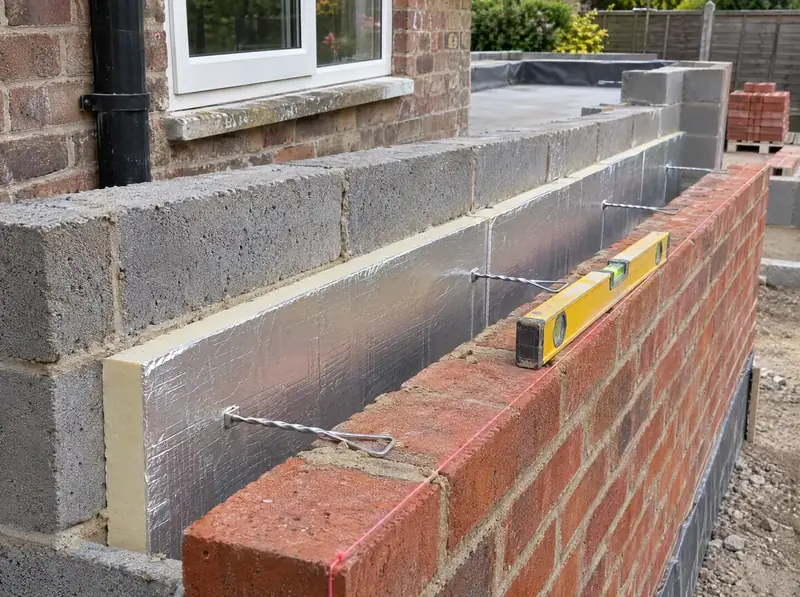
Building regulations for two-storey extensions
Building regulations approval for a two-storey extension involves preparing technical drawings and a specification that show how the extension meets the rules on structure, fire safety, insulation, ventilation, electrics and drainage, getting them approved and having the work inspected.
Learn more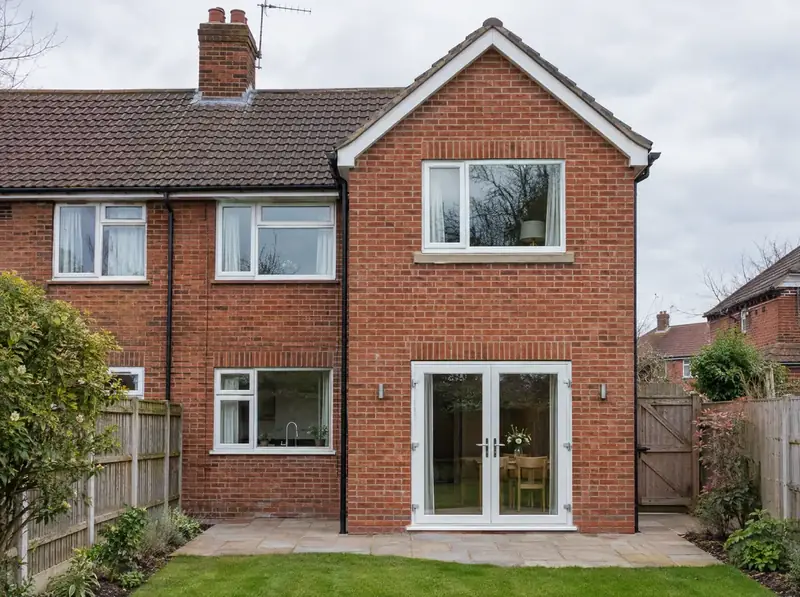
Two-storey rear extensions
A two-storey rear extension is a new two-floor addition built onto the back of your house, usually giving a larger kitchen or living space on the ground floor and one or two bedrooms or a bathroom above.
Guide from £56,000Learn more