Updated 9 November 2026 · Written by the Two Storey Extensions team
Short answer: In England and Wales, you need to serve notice under the Party Wall Act if your two-storey extension involves building a new wall on the boundary line, cutting into or raising a shared wall, or digging foundations close to a neighbour's building. If your neighbour consents in writing, no surveyor is needed; if they dissent or do not reply, surveyors settle how the work is done. The Act does not apply in Scotland or Northern Ireland.
When does the Party Wall Act apply to a two-storey extension?
The Party Wall etc. Act 1996 applies in England and Wales. It sets out a procedure for certain work that affects a wall or boundary shared with a neighbour, or that involves digging near a neighbour's building. For a two-storey extension, the Act commonly applies if you:
- Build a new wall on or astride the line of junction with your neighbour's land.
- Cut into a party wall, for example to insert a steel beam or bear a new floor, or raise it.
- Excavate within 3 m of a neighbour's building to a depth below their foundations, or within 6 m where the excavation would cut a 45-degree line drawn down from their foundations.
The Act is separate from planning permission and building regulations. Having planning permission does not remove the need to serve notice, and the Act does not apply in Scotland or Northern Ireland.
What notices do I need to serve and how much notice must I give?
Each type of work has its own notice and minimum notice period:
| Type of work | Notice | Minimum notice |
|---|---|---|
| New wall on the line of junction | Line of junction notice | 1 month |
| Work to an existing party wall, such as cutting in a beam or raising the wall | Party structure notice | 2 months |
| Excavation within 3 m or 6 m in the circumstances the Act sets out | Notice of adjacent excavation | 1 month |
You may need to serve more than one notice on the same neighbour, and you must serve each adjoining owner, which can include both a freeholder and a leaseholder. Your neighbour can agree in writing to work starting sooner than the notice period.
Notices must include the information the Act requires. The government's explanatory booklet and example letters show what to include.
What can my neighbour do after receiving a notice?
Your neighbour, called the adjoining owner in the Act, can respond in one of three ways:
- Consent in writing. The work can go ahead once the notice period ends, or sooner if they agree. It is still wise to record the condition of their property first.
- Dissent. A dispute has then arisen under the Act, and surveyors are appointed to settle it.
- Not reply. For a party structure notice or an excavation notice, if your neighbour does not consent within 14 days, the Act treats this as a dispute and surveyors are appointed.
In some cases your neighbour can also serve a counter-notice asking for certain additional work to be included, at their own cost unless the Act says otherwise.
Speak to your neighbour before serving notice. Explaining the plans in person can make consent more likely and avoids surprises.
What happens if my neighbour dissents?
If there is a dispute, the Act provides two options. You and your neighbour can appoint one agreed surveyor to act impartially for both of you, or each of you can appoint your own surveyor. Where there are two surveyors, they select a third surveyor at the start, who is called on only if they cannot agree.
The surveyors usually prepare a schedule of condition of the neighbour's property, and they make a legally binding written decision under section 10 of the Act. It sets out what work can be done, how and when it will be done, and who pays the costs. Either party can appeal to the county court within 14 days of receiving it.
Dissent does not stop the extension. It means the work goes ahead on terms the surveyors set, which protect both properties. The process does take time, so serve notices as soon as the design is settled.
How much does a party wall surveyor cost?
For a typical rear or side extension, one agreed surveyor usually costs about £1,300–£1,500 plus VAT. If your neighbour appoints their own surveyor, you will normally pay for both, so the total is higher. Complex work, such as underpinning, or several neighbours, costs more.
The building owner, meaning the person having the work done, normally pays reasonable surveyors' fees. If the work damages the neighbour's property, the building owner is also responsible for making good or paying compensation.
Allow for this in your budget from the start. It is one reason to design the extension with the Act in mind: keeping foundations off the boundary, or choosing a foundation type that avoids deep digging near a neighbour, can sometimes reduce the notices needed. Your structural engineer and designer can advise on the options.
What if I start work without serving notice?
Work covered by the Act should not start until notice has been served and either the notice period has ended, your neighbour has consented, or the surveyors have made their decision. If you start without following the procedure, your neighbour can apply to the courts for an injunction to stop the work.
Starting without notice also means you lose the protection the procedure gives you. Without a record of the condition of the neighbour's property, it is harder to show whether cracks or other damage were there before your work started.
Stopping work part-way through is expensive, because the builder, scaffold and materials are already committed. Serving notices early, once the structural design shows where beams and foundations will go, avoids that risk.
What happens in Scotland and Northern Ireland?
The Party Wall etc. Act 1996 does not apply in Scotland or Northern Ireland, and neither has an equivalent statute. You do not serve party wall notices there, and there are no surveyors appointed under an Act.
Instead, rights over shared walls and boundaries depend on common law and the title deeds for each property. In Scotland, shared walls are often called mutual gables. If your extension involves building on or against a shared wall, cutting into it, or using your neighbour's land for access or scaffolding, you need their agreement.
Good practice is the same as in England and Wales: talk to your neighbour early, agree the work in writing, ideally with a solicitor's help, and have a surveyor record the condition of their property before work starts.
Questions about this topic
Do I need a party wall notice for a detached house?
Possibly. If the extension is well away from the boundary, you may not need one. But if foundations are dug within 3 m of a neighbour's building and deeper than its foundations, or within 6 m and crossing the 45-degree line, an excavation notice is needed in England and Wales even for a detached house.
Can my neighbour stop my extension using the Party Wall Act?
No. The Act controls how and when notifiable work is done, not whether you can build. If your neighbour dissents, surveyors decide the terms for the work. Planning permission is a separate matter, and your neighbour can comment on a planning application, but the party wall procedure itself is not a veto.
Who pays for the party wall surveyor?
The building owner, meaning the person having the work done, normally pays reasonable surveyors' fees, including the cost of the neighbour's surveyor if they appoint one. The surveyors decide who pays in their written decision. Costs can be shared differently in some cases, for example where work is done partly for the neighbour's benefit.
When should I serve party wall notices?
Serve them once the design shows where foundations, beams and walls will go, which is usually after the structural design. Allow at least 1 month, or 2 months for work to a party wall, before work is due to start, plus time for surveyors if your neighbour dissents. Notices are only needed in England and Wales.
Sources
- GOV.UK: The Party Wall etc. Act 1996, explanatory booklet
- legislation.gov.uk: Party Wall etc. Act 1996
- GOV.UK: Preventing and resolving disputes in relation to party walls
- RICS: Party walls consumer guide
Related services
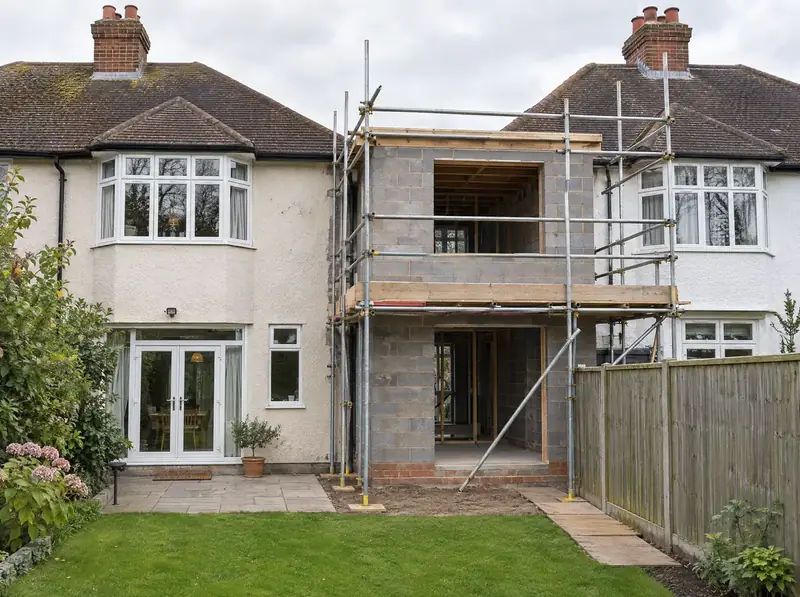
Party wall notices for extensions
A party wall notice is a formal written notice that you must give your neighbours under the Party Wall etc. Act 1996 before certain work on or near a shared wall or boundary in England and Wales.
Learn more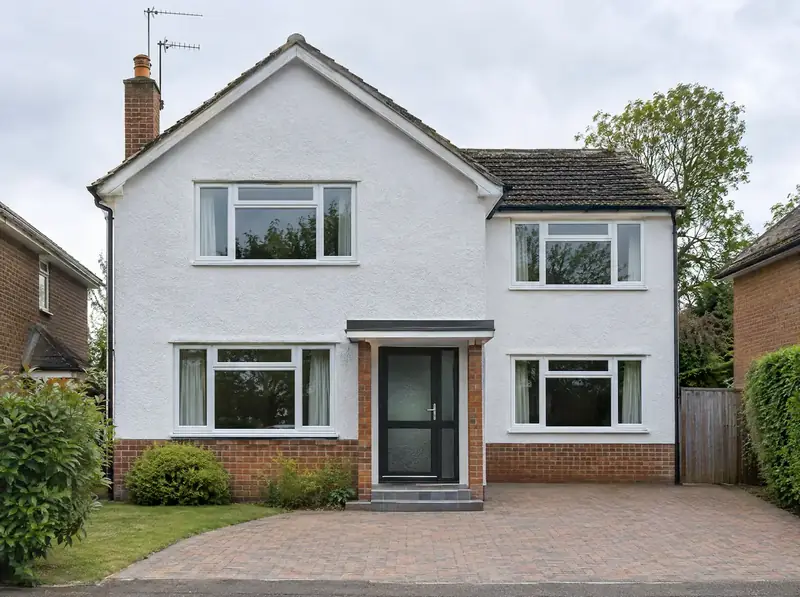
Two-storey side extensions
A two-storey side extension is a new two-floor addition built into the space beside your house, often over a driveway or side passage.
Guide from £86,000Learn more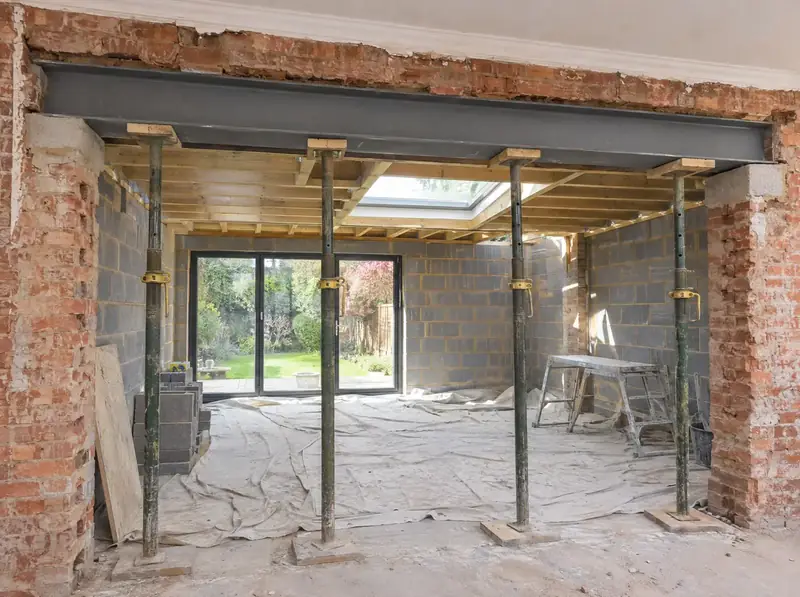
Structural engineering for two-storey extensions
Structural engineering for a two-storey extension involves calculating how the new floors, walls and roof carry their loads down to the ground, and designing the beams, lintels, foundations and ties into the existing house to suit.
Learn more